Widely regarded as the film that heralded the Korean New Wave, Chil-su and Man-su is grounded in the deeply realistic social backgrounds of its protagonists. Chil-su (Park Joong-hoon), who oscillates between charming cheekiness and swagger while constantly telling lies, grew up around the Dongducheon U.S. military camp town. Meanwhile, Man-su (Ahn Sung-ki), who paints movie and commercial billboards, has spent his entire life keeping his head down as the son of an unrepentant long-term communist prisoner. While Chil-su clings to the vain hope of an invitation from his sister in the United States, Man-su is self-deprecating in every aspect of life, harboring no expectations and focusing solely on earning money. If Chil-su, with his endless bravado whenever he speaks, breathes vitality into the film, Man-su, with his cynical and resigned dialogue, represents the ordinary citizen consumed by despair. Ahn Sung-ki has consistently portrayed the faces of individuals frustrated by capital, dictatorship, and class discrimination across different eras. Though his expression appears neutral, his eyes and subtle wrinkles carefully capture despair, resignation, and pessimism, radiating the deep sorrow of the impoverished working class of the 1980s.
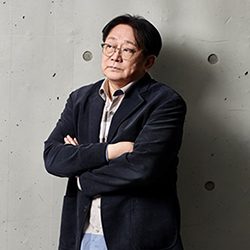
Born in 1955 in Sokcho. He studied film directing at the École supérieure d′études cinématographiques (ESEC) in Paris, then worked as an assistant director to Lee Jang-ho before making his feature directorial debut with Chil-su and Man-su. He went on to become a leading figure in the Korean New Wave, addressing the realities of Korean society in films such as Black Republic (1990) and A Single Spark (1995). A Single Spark won Best Film and Best Director at the Blue Dragon Film Awards.
From Busan International Film Festival 2026, No. 31