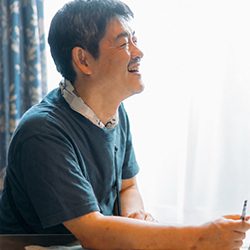
Competitive sectionBusan Award for Best Actor, Kashun HIMENO
Love/RomanceWomenComedy/Satire
"They say anyone can write at least one book—the story of their own life." In Satoko Always, acclaimed director Okita Shuichi takes this gentle premise and crafts a deeply moving, beautifully woven tapestry of womanhood, creative awakening, and human connection. The film follows three women at different stages of life: 15-year-old junior high student Satoko (Himeno Kashun), experiencing the tender ache of first love; 35-year-old film publicist Satoko (Arimura Kasumi), navigating the stagnant waters of an extramarital affair; and 55-year-old housewife Satoko (Ishida Hikari), reclaiming her identity after raising her children. Though their paths seem miles apart, unexpected events spur each woman to pick up a pen—and as their individual narratives unfold, their lives begin to subtly, magically intertwine. True to Okita’s signature style, the film captures the delicate balance of life’s bitter and sweet moments. Across its 138-minute runtime, Satoko Always never loses momentum. Instead, it invites us to slow down, reflect, and honor our own unspoken histories. Warm, bittersweet, and undeniably resonant, this film is a testament to the idea that no matter your age or circumstance, it is never too late—or too early—to become the author of your own story.
Okita Shuichi was born in Saitama Prefecture, Japan, in 1977 and is a film director and screenwriter. After directing several independent short films, he made his feature film debut with What a Wonderful World (2006). He subsequently gained widespread recognition and both critical and commercial success with The Chef of South Polar (2009). His 2012 film The Woodsman and the Rain won the Special Jury Prize at the Tokyo International Film Festival and three awards at the Dubai International Film Festival. His major directorial works include A Story of Yonosuke (2013), Mori, the Artist′s Habitat (2018), and Ora, Ora Be Goin′ Alone (2020).
From Busan International Film Festival 2026, No. 31